
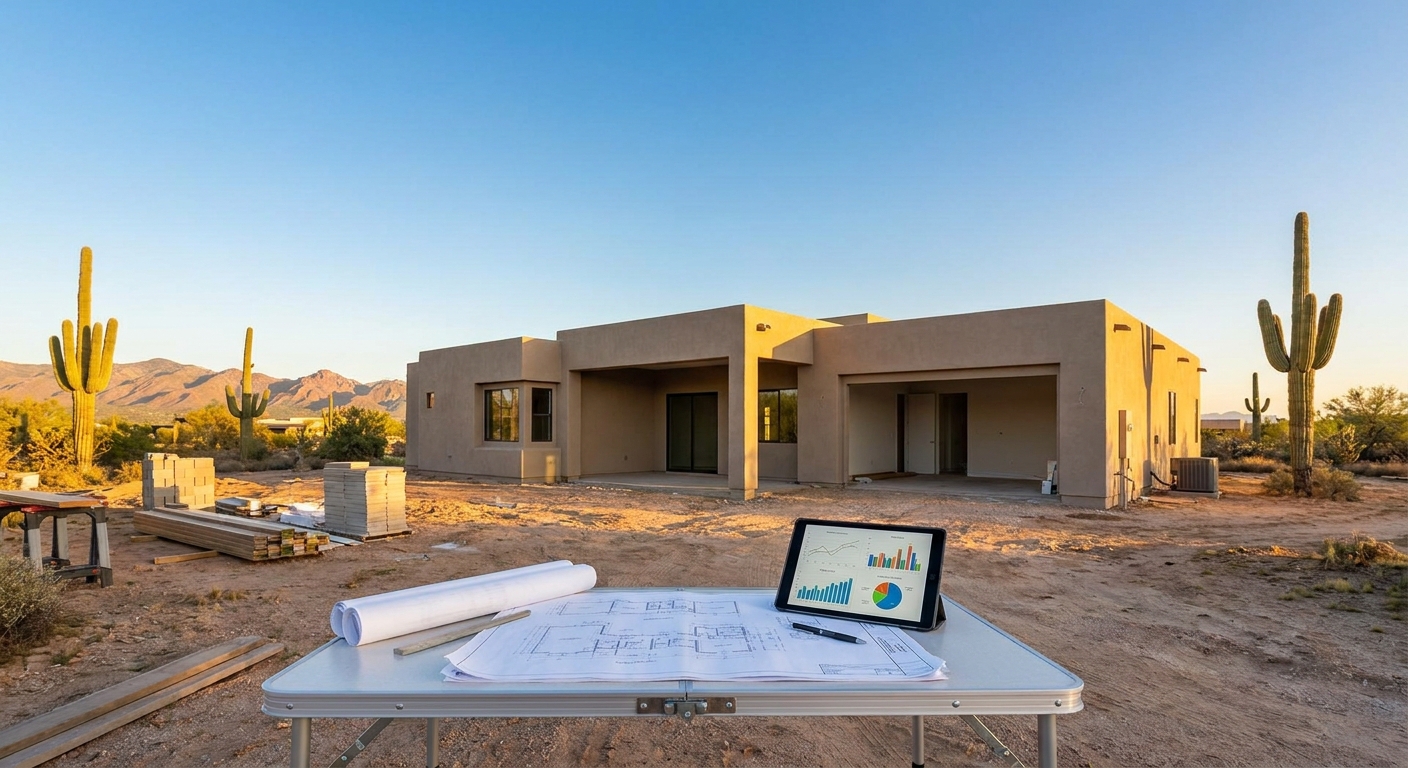
Why Accurate Rehab Estimates Protect Your Cash-on-Cash Return
In competitive Phoenix Valley markets like Gilbert and Chandler, miscalculating rehab costs by even $15,000 can reduce your first-year cash-on-cash return by over 100 basis points. When underwriting acquisitions remotely or during tight inspection contingency windows, investors often make the mistake of relying on generic national averages or optimistic seller disclosures.
To secure target cap rates—typically ranging between 5.0% and 6.2% for stabilized single-family rentals in East Valley suburban submarkets—you must establish a rigid, localized framework for estimating scope of work before committing capital.
Key Capital Expenditure Line Items in the Phoenix Market
Every market has distinct structural stress points. In the Phoenix Metro area, extreme heat and local building standards dictate specific maintenance schedules and replacement costs:
1. HVAC Systems
In Gilbert and Chandler, cooling systems run continuously for five to six months of the year.- Expected Lifespan: 12 to 15 years.
- Replacement Cost: $7,500 to $10,500 per unit (4–5 ton 14 SEER2 standard).
- Underwriting Rule: If the condenser date tag shows 12+ years of age, model an immediate replacement into your initial capital requirements rather than relying on operating cash flow.
2. Roofing & Underlayment
Most homes built in Gilbert and Chandler after 1990 feature concrete tile roofs. While the tiles themselves last 50+ years, the underlying felt paper degrades under desert heat.- Underlayment Replacement: $8,000 to $12,000 for a 2,000 sq ft home.
- Asphalt Shingle Replacement: $6,000 to $8,500.
3. Cosmetic Interior Refresh
To achieve top-of-market rents (currently $1.15 to $1.35 per square foot in primary Gilbert/Chandler zip codes), tenant turn scope usually requires durable, mid-grade finishes:- Luxury Vinyl Plank (LVP) Flooring: $4.50 to $6.50 per sq ft (installed).
- Interior Paint: $2.50 to $3.50 per sq ft of floor area.
- Kitchen & Bath Cabinet Refinishing / Quartz Counters: $6,000 to $9,000 total.
Building the Pre-Offer Scope of Work (SOW)
Before making an offer or during the inspection period, run every prospective property through a standardized three-step estimation model:
1. Square-Footage Line-Item Calculation: Multiply target floor areas by localized labor/material benchmarks rather than applying a flat dollar-per-square-foot blanket estimate. 2. Mechanical & Systems Audit: Review the age of HVAC units, water heaters (average replacement: $1,500–$2,200), and pool pumps (if applicable, single-speed to variable-speed conversion: $1,800–$2,500). 3. Contingency Layering: Apply a 15% contingency buffer for properties built after 2000, and a 20% to 25% contingency buffer for homes built prior to 1990.
The Math: How Underestimating Rehab Impact Return Metrics
Consider a typical single-family acquisition in Chandler:
- Purchase Price: $460,000
- Down Payment (25%): $115,000
- Closing Costs: $8,000
- Initial Estimated Rehab: $25,000
- Total Invested Capital: $148,000
- Projected Net Operating Income (NOI): $24,800
- Annual Debt Service ($345k loan at 6.5%): $21,870
- Net Cash Flow: $2,930
- Projected Cash-on-Cash Return: 1.98%
If your actual rehab costs balloon from $25,000 to $40,000 due to missed HVAC and roof underlayment issues:
- Adjusted Total Invested Capital: $163,000
- Actual Cash-on-Cash Return: $2,930 / $163,000 = 1.79%
Furthermore, your unlevered yield on total cost drops from 5.11% ($24,800 / $485,000) down to 4.96% ($24,800 / $500,000), missing baseline yield targets.
Localized Execution in East Valley Markets
Accurate underwriting depends on real-time data from local trades and active deal flow. As an A.I. Certified Realtor with over a decade of experience in the Phoenix Valley assisting out-of-state investors and local buyers, Srini Mocharla at Kirans & Associates Realty LLC helps clients model precise rehab schedules, evaluate mechanical lifespans, and protect net operating yields before capital is deployed.